La Prensa San Diego News Desk
A local Superior Court Judge has ordered the City of Chula Vista to pay over $500,000 to the law firm that represented La Prensa San Diego in its successful lawsuit over the release of videos recorded by police drones.
The lawsuit, filed in May 2021 seeking the release of Chula Vista Police Department drone videos, was upheld for the second time by the California Supreme Court on August 14th, ending over four years of litigation.
On October 9th, San Diego Superior Court Judge Katherine Bacal awarded attorney Cory Briggs all of the legal fees and costs his firm incurred in the case since May 2021, when the lawsuit was filed, plus she granted Briggs a 1.5 multiple on his fees as reimbursement for having taken the case on contingency.
Bacal also weighed the fact that the case created a new precedent as a matter of “first impression” that went before both the Court of Appeals and the California Supreme Court.
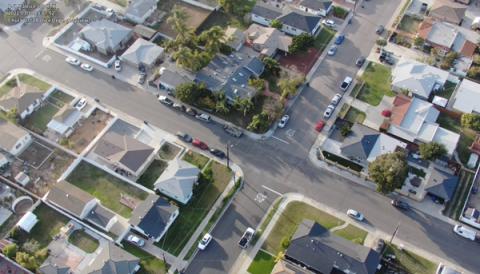
In 2018, Chula Vista’s police department became the first law enforcement agency in the country authorized by the FAA to fly drones beyond visual line-of-sight of the operator as part of a pilot program to help create a safe process for drones to be used as first responders to reduce emergency response times and increase officer safety.
Three years after the program launched, LPSD requested copies of police drone videos from just one month —March 2021— for an article on how the program was going and, specifically, to see how CVPD was using their drones.
Chula Vista’s then-City Attorney, Glen Googins, rejected the request for videos, claiming that all police drone videos were categorically exempt from disclosure as investigative records even without reviewing them to see which may be tied to investigations.
La Prensa San Diego sued to request the release of videos under the provisions of the California Public Records Act (CPRA), which requires the release of public records with very few exemptions.
One of the exemptions covers “investigative records” tied to actual investigations.
La Prensa San Diego’s April 2021 CPRA request specifically excluded any videos tied to actual police investigations, yet Chula Vista refused to release any of the thousands of videos they had already recorded.
During the litigation, Chula Vista’s lawyers argued that all drone videos should be categorically exempt from disclosure because every deployment of a drone was to investigate a potential crime, even if none was found at the time the drone arrived.
In December 2023, the California District Court of Appeals in San Diego disagreed, ruling that police would have to sort drone videos into three categories: (1) those that are part of an investigatory file, (2) those related to an investigation into whether a law has been broken but did not lead to an investigatory file, and (3) records of factual inquiries.
The Court ruled that records in Categories (1) and (2) are exempt from disclosure, but that records in Category (3) are subject to review by a court before release to determine if any other exemptions may apply.
The Court of Appeals published its ruling, creating a new legal precedent that can be used by other similar cases in the future.
The case, filed by La Prensa San Diego Publisher Arturo Castañares, is cited as Castañares v Superior Ct 98 Cal.App.5th 295, 316.
The ruling relied on two previous California Supreme Court cases —Haynie v. Superior Ct. (2001) and American Civil Liberties Union (ACLU) Foundation v. Superior Ct. (2017)— to determine how to analyze the novel issues related to new technology that did not exist when those two cases were heard.
In Haynie, the Court held that the investigatory exemption applies to records related to a specific incident but acknowledged that “by including ‘routine’ and ‘everyday’ within the ambit of ‘investigations’ [the Legislature did] not mean to shield everything law enforcement officers do from disclosure.”
The California Supreme Court held in the ACLU Foundation case that the exemption does not apply to Automated License Plate Reader (“ALPR”) data because ALPR scanning “does not produce records investigations [and is] not conducted as part of a targeted inquiring into any particular crime or crimes.”
The Court's ruling applies to any investigative records sought -not just drone videos- which police agencies have been found to label as "investigative" to avoid public disclosure.
The City of Chula Vista filed a petition to have the California Supreme Court overturn the Appeals Court, and several police organizations submitted letters to the Court in support of the City’s appeal.
One of those letters, written by the Los Angeles County Police Chiefs’ Association, argued that the case should be overturned because of the importance of the data from drone videos which “can be integrated with other sources, such as public safety camera or satellite feeds and [automated license plate readers], and enhanced by analytical technologies, such as facial recognition software and other AI,” admitting for the first time that drone videos are part of a larger network of surveillance systems deployed throughout California.
Another letter, submitted by the law firm of Liebert Cassidy Whitmore, which represents the California Police Chiefs Association, claimed the “investigation exemption in the CPRA should apply to all of the aerial drone footage at issue” and argued that the case would discourage police agencies from using drones.
“The Castañares decision will discourage law enforcement from using technology that produces or relies upon such digital data. This is because of the person-hours now added to retrieving, reviewing, and redacting such files, and inresolving disputes, video-by-video, over exemptions. It is also because of the risks of releasing these files laden with both tactical and private information. The decision also invites burdensome and intrusive CPRA requests.”
The Supreme Court rejected the City’s petition within just two weeks, sending the case back to the Superior Court to decide which videos to order released.
San Diego Superior Court Judge Timothy Taylor asked the City to list all of the videos from March 2021 and sort them into the three categories outlined by the Appeals Court.
The City listed 298 videos under Category 1, 57 videos under Category 2, and 7 videos under Category 3.
LPSD argued that the City included videos in Category 2 which did not seem to be connected to actual investigations according to the descriptions listed by the City, arguing 30 of the 57 videos in Category 2 and all 7 videos Category 3 should be released.
Judge Taylor asked the City to submit the 37 disputed videos to him for review in chambers so he could watch them to determine whether they included any investigative aspects that would shield the videos from disclosure.
After arguing that none of the videos should be released because they are all investigative records, the City's lawyers turned to a last-ditch argument claiming that any videos that do not show investigative actions would not include anything of value for the public to see so, therefore, those videos should not be released either.
In the end, Taylor ordered the City to release 25 of the videos, including all seven in Category 3 and 18 from Category 2, which Taylor ruled were not related to investigations.
One video, recorded on March 8, 2021, was described by CVPD as a call for service for a “car fire” but shows that no vehicle was found in the area, and the drone flew back to the police station without incident.
“The Uncrewed Aerial System responded to a car fire call heard via Live911. The Reporting party did not know the location of the car fire and was reporting the information second-hand. The UAS checked the area but nothing was seen,” the video log shows.
Another video, recorded on March 28, 2021, labeled as “No detail collision”, shows the drone scanning the areas along State Route 54 at the Chula Vista and National City border, but no vehicle was found.
"Call heard via Live911 regarding a collision on the freeway with a Jeep that went off of the roadway. The Uncrewed Aerial System checked the area, but there was nothing matching in the area,” the log entry states.
None of the videos released by the Court were tied to any actual investigations, yet the City argued they should be exempt from disclosure to the public.
The City promptly filed a petition to the Court of Appeals challenging Taylor’s release of the videos as being inconsistent with the Court’s December 2023 decision. The Appeals Court declined to overturn Taylor’s ruling.
Then, in August, the Chula Vista City Council voted 3-2 in a closed session meeting to spend $35,000 to file a petition for review by the California Supreme Court, again asking the state’s highest court to overturn the release of drone videos.
On August 14th, the California Supreme Court denied the City’s petition, ending more than four years of litigation. There is no further legal view of the case possible.
After the final court order, Briggs filed a motion to recover his legal fees and costs as provided for by the California Public Records Act when someone wins a case over the release of public records.
In his motion, Briggs requested a total of $332,638.75 in legal fees, plus $156.20 in court costs, and asked the Court for a 2x multiplier known as a Lodestar method calculation.
Courts are allowed to compute a positive or negative multiple to legal fee awards to adjust fees up or down based on the case’s complexity, length, novelty of issues, and whether a lawyer accepted the case on a win-only contingency basis.
Briggs handled the case on contingency, which put his law firm at risk for all attorneys' fees and costs during the four-year case, with the hopes of being compensated only if the case was successful.
The case also involved new issues of the application of the California Public Records Act to police drone videos, which had never been litigated anywhere in the US.
The City opposed Briggs’ motion for his fees based on two arguments, which were both rejected by Judge Bacal.
First, the City inaccurately claimed that “there was no declaratory relief” but referred only to the December 2023 ruling by the Court of Appeals, which sent the case back to the trial court to decide which videos should be released.
In the end, the trial court did order the release of 25 videos, which was the declaratory relief sought in the initial filing.
The City also argued that the case was “not legally challenging” in an attempt to diminish the significance of the challenge the case faced in standing against nearly every major police organization in the state.
In the City’s filing asking the California Supreme Court to overturn the case, it argued that the case was “unlike any opinion before it” and that “no precedent imposes such a standard” on other surveillance systems.
“Unlike any opinion before it, Castañares v. Superior Court requires granular review and categorization of law enforcement records before an agency may deny a public records request on the grounds it seeks investigatory records and the burden of responding to the request outweighs the public interest in disclosure,” the City’s lawyers wrote to the Court. “No precedent imposes such a standard on analogous technologies like body-worn cameras, back-seat cameras, and automatic license plate readers.”
Judge Bacal rejected the City’s arguments, ruling instead that “the trial court’s judgment included a judicial declaration that the City did not comply with the CPRA” and therefore “no reduction is made based on this argument made by the City.”
Bacal also dismissed the City’s argument that the case was “not legally challenging,” citing the “novel and complex issues” raised in the case and the fact that the Court of Appeals published the case it called “a matter of first impression.”
“Here, the case involved novel and complex issues, and this is supported by the Court of Appeal publishing an opinion on a matter of first impression,” Judge Bacal wrote in her decision.
Bacal awarded Briggs a 1.5 Lodestar multiple, bringing the fee award to $498,958, plus the $156.20 in court costs, for a total of $499,114.20.
State law also allows a 7% interest rate to accrue on the total fees and costs award from the date of the judgment issued by Judge Taylor on May 16th, adding nearly $96 of interest per day to the amount due to Briggs.
As of today, the amount of interest due to Briggs is over $15,200.
Although the City has not disclosed the total amount spent on the case, the City's Communications Manager, Michele Clock, told the San Diego Union-Tribune in December 2023 that their "legal costs on this case so far total about $400,000" after the Court of Appeals ruled on the case, but that does not included legal fees incurred in the 18 months since that ruling.
La Prensa San Diego filed a California Public Records Act request this week for copies of all invoices paid by the City to its outside law firm that defended the case from May 2021 to the end of the case.
The law firm of Colantuono, Highsmith & Whatley represented the City, in addition to lawyers within the Chula Vista City Attorney's office.