<p><br>
<strong>PODER</strong></p>
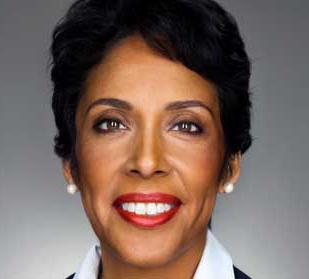
<p><a class="highslide" onclick="return vz.expand(this)" href="https://cms.laprensa.org/sites/default/files/2012/03/d_ocana_girlscouts… loading="lazy" class="alignright wp-image-16628" title="d_ocana_girlscouts_500x279" src="https://cms.laprensa.org/sites/default/files/2012/03/d_ocana_girlscouts…; alt="" width="210" height="189"></a>Anna Maria Chavez remembers her grandmother’s reaction when as a little girl she announced that she wanted to join the Girl Scouts.</p>
<p>“She looked at me and said ‘Qué? What are you doing?’ “ Chavez says with a laugh. “ ‘Uniforms? Camps? Are you joining a military organization?’ It just didn’t translate. As a kid, I wasn’t allowed to stay overnight anywhere; I was always accompanied by a brother, a tía. But when I told her all these things I could do—go to camp, learn horseback riding, other things that I wouldn’t have been able to do in our small town, my family got it. It really built up my courage and confidence to get out there and try things.”</p>
<p>That confidence has served her well. The Eloy, Ariz., native went on to earn an Ivy League law degree, work in the Department of Transportation’s general counsel office and serve under two Arizona governors—Jane Dee Hull and Janet Napolitano. But it’s her latest job, as the first Latina CEO of the Girl Scouts, that is particularly close to her heart for the opportunity it affords to educate girls beyond the classroom.</p>
<p>“I’m so blessed to be able to lead a place that did so much for me,” says Chavez, former CEO of Girl Scouts of Southwest Texas. “And it’s been wonderful to go out to events where other Latinos will just walk up to me and say, ‘We’re so proud, this is historic.’”</p>
<p>With the country’s Hispanic population booming and the Girl Scouts—which is celebrating its 100th anniversary this year—reaching 10 percent of the total girls population, it’s no surprise that among Chavez’s chief goals is getting Hispanic families involved in the organization, from signing up more Latina girls to recruiting more Latino adults to volunteer as troop leaders and instructors who teach subjects including science and technology, music, financial literacy or practical life skills.</p>
<p>Chavez says the Girl Scouts have seen a 24 percent increase in Latina members and a 46 percent increase in adult Latino volunteers in the past eight years. “That’s a good start, but there’s a lot of work to do,” Chavez says, adding that though the Girl Scouts’ “message resonates with Latino parents who want their daughters to succeed in life in whatever they choose,” Latino parents’ tough work schedules and a lack of a scouting tradition in the Latino community still present a challenge.</p>
<p>But it’s a challenge that Chavez is well prepared to take on, having led the Southwest Texas branch, where more than half of the 21,000 members were Hispanic, before being asked to lead the non-profit’s U.S. operations. “Demographers would tell us that that’s what the whole country will look like in 20 years,” she says. At the Southwest Texas council, she was witness to how Latina girls turned adversity—whether in the form of racial discrimination, educational attainability struggles or lack of mentors—into a source for resilience. “So when they are prepared to take on a leadership role, they are really ready,” she says. “They are pretty well prepared as long as they have someone or a support system to help them achieve what they want in their leadership journey and that’s what Girl Scouts has provided for 100 years now.”</p>
<p>She credits the organization—as well as a family of strong women including her mom and grandmother—for helping her in her own path to success. After graduating from Harvard, Chavez was recruited to work on federal highway issues at the Department of Transportation, before heading home to Arizona to serve under Hull and Napolitano, in various positions including as housing and economic development policy advisor and as Napolitano’s director of intergovernmental affairs and deputy chief of staff.</p>
<p>Chavez says they taught her lessons that she hopes to pass on to girls in her care. “What they taught me the most, is that absolutely they were female, but first and foremost they were leaders,” Chavez says. “And they came to positions with great experience, great education and vision as to what they wanted to accomplish. That’s what I hope to do.”</p>


Image
Image
Category