<p></p>
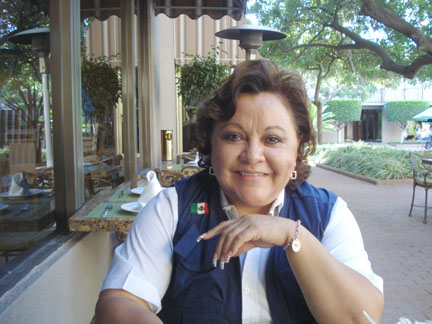
<figure id="attachment_8255" aria-describedby="caption-attachment-8255" style="width: 389px" class="wp-caption alignright"><a class="highslide" onclick="return vz.expand(this)" href="https://cms.laprensa.org/sites/default/files/2010/09/mari-carmen-2.jpg"… loading="lazy" class="size-full wp-image-8255 " title="mari carmen (2)" src="https://cms.laprensa.org/sites/default/files/2010/09/mari-carmen-2.jpg&…; alt="" width="389" height="292" srcset="https://cms.laprensa.org/sites/default/files/2010/09/mari-carmen-2.jpg 432w, https://cms.laprensa.org/sites/default/files/2010/09/mari-carmen-2-300x… 300w" sizes="(max-width: 389px) 100vw, 389px"></a><figcaption id="caption-attachment-8255" class="wp-caption-text">Journalist Mari Carmen Flores</figcaption></figure>
<p> Mari Carmen Flores can barely contain her excitement. In fact she’s not even trying to. She started working on a story that highlights drug prevention among teens in Tijuana. We’ve barely met, but already she’s talking about how she’ll write the story and how she’ll make it original. In a matter of seconds, it’s as if she becomes a type of chef, describing all the ingredients that will eventually make her story a delicacy, a masterpiece. From the get go it’s obvious, journalism is not only Mari Carmen’s profession but her passion.</p>
<p> “This job is definitely a key part of my life,” says the 49 year old. “After all these years, I still get a rush out of it.”</p>
<p> She’s probably the best known television reporter in Tijuana. Some of her stories are even featured in so called ‘narco corridos’ songs where artists sing about drug battles while mixing in traditional northern music. Over the last 26 years Mari Carmen has earned a solid reputation for her direct, no nonsense style. She’s covered it all-from education to sports. But she’s mostly known for her fearless reporting on crime, drug trafficking and politics.</p>
<p> “That woman does not hold back,” said Channel 12 viewer Karla Gomez. “She’s not afraid to name names. My husband and I usually glance at each other with raised eyebrows when we listen to some of her reports. We think, wow-she’s putting her self out there.”</p>
<p> In a time when Mexico has unwillingly become one of the most dangerous countries for investigative journalists, it’s surprising that Mari Carmen says she doesn’t feel threatened by the highly publicized murders, kidnappings and threats.</p>
<p> “When you’re a border reporter, you can’t escape working on stories about drug trafficking and violence,” she says as she takes a sip from her drink. “I’m not afraid of covering those stories. It’s just part of my job.” </p>
<p> The Mexico City native does admit there is a real risk in digging deeper into controversial stories.</p>
<p> “Some of my colleagues try to act like they’re prosecutors -that’s when things get real dangerous. I just try and stick to being a journalist,” she says confidently. “I just hope violent trafficking cells that are operating in cities like Ciudad Juarez and Monterrey don’t have their eyes set on Tijuana.”</p>
<p> Still Mari Carmen is no stranger to indirect threats—threats she shrugs off as a possible coincidence.</p>
<p> In March 2007, her home was broken into. When she walked into her house, she found all her belongings scattered about, yet nothing was stolen. Perhaps most disturbing is that the suspects made it a point to shuffle several of her undergarments from where they were kept.</p>
<p> “It was a way of them saying—we can have access to your intimate life without a problem,” says the reporter. “The police said it was a form of intimidation. Who knows…nobody was ever arrested even though my neighbors called the police right away.”</p>
<p> Around that same time, Mari Carmen says she had just finished a series on Tijuana city officials. For months she looked into conflicting reports about exactly how much money the city was spending on street repairs and pot holes.</p>
<p> “The numbers just didn’t add up,” she says with a matter of fact tone. “Whether or not the incident was connected to my reports, I just don’t know.”</p>
<p> After that break in, the state government appointed three federal officers to look after Mari Carmen and her family; a practice that’s not unusual in some Mexican states.</p>
<p> “The controversy is not always related to drug trafficking,” says the reporter. “With every story you can affect someone’s interests.”</p>
<p> Nearly three years later, Mari Carmen is now down to two guards. One who follows her every move and another who protects her teenage daughter. The third state officer was assigned to guard her house for only a year.</p>
<p> A constant challenge for the Tijuana reporter is trying to find the right balance between her career and family life.</p>
<p> Mari Carmen married a print journalist more than 20 years ago. The couple has two daughters together. A 23 year old who lives out of the city and an18 year old college student. With a broken smile, she remembers key moments in her career where she was able to successfully balance her family life with a demanding schedule. In 1994 when presidential candidate and front runner Luis Donaldo Colosio was murdered in Tijuana, she worked three days straight, reporting for Televisa and other stations throughout the world. She says she didn’t go home at all during that period. </p>
<p> “Not many Mexican husbands would be able to stand that,” she recalls. “I didn’t sleep at home for three days. He understands it’s what I have to do.”</p>
<p> She also looked back on how on a recent Saturday, when she was just about to enjoy breakfast with her family, she got a call form a producer. A fatal shooting had just happened about three blocks from the restaurant she was in. She was off that day, but without a second thought, Mari Carmen grabbed her things and left. Her daughters started crying, begging her not to go. There’s no newscast on weekends-what was the point? Still, Mari Carmen felt compelled to go. To this date, she doesn’t regret it.</p>
<p> “What better way is there to teach your children to have passion for whatever career they choose?” she asks.</p>
<p> As a child, when she was just 6 year old, her father, who worked as a day laborer, unknowingly jumped started her journalism career. Every even-ing after getting home from work, he would test his six children on the daily newspaper headlines. It started off as a game but it quickly turned into a responsibility to follow her father’s rules. As years went on, she sharpened her journalistic instincts, working as a reporter while completing her college degree in Mexico City.</p>
<p> “As a journalist I have a deep social responsibility to improve my city by providing information. I never want to be a reporter who just adds her name to a press release.” says Mari Carmen. “That’s not who I am. It’s not what I do.</p>
<p> When asked what she sees in her future. She pauses for a few seconds…and then responds</p>
<p> “When I retire, I still want to stay active. I love journalism because I’m constantly learning,” she says. “Who knows, maybe I’ll study law or become a paramedic. But, when that day comes, I’ll look back with pride.”</p>


Category