By Arturo Castañares
Publisher
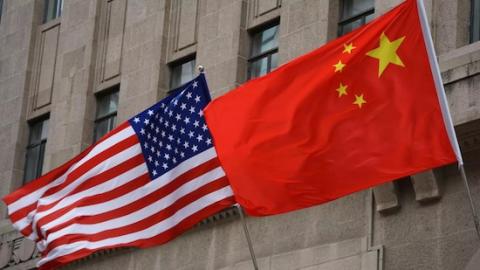
Donald Trump and his acolytes decry “socialists” as a threat to American democracy, yet the President continues to advocate economic and political positions that are not very much different from some of the most socialist countries in the world, primarily our most threatening economic and military adversary: China.
During his first term in office and now during the first year of his non-sequential second term, Trump has unilaterally imposed arbitrary tariffs on imports, encouraged —if not threatened— American companies to on-shore manufacturing back to the US, publicly bullying the independent Federal Reserve Chairman to lower interest rates, and most recently, taken equity positions for the US government in at least nine American companies involved in strategically important markets, including semi-conductors, rare Earth minerals, nuclear energy, and steel, including a newly 10% ownership stake in chipmaker Intel.
Although Trump has argued that the nearly $10 billion in stock ownership through direct government investment in American companies is vital for national security and strategic reasons, the US President has not clarified how he decided which companies the government would partly own, how the decisions were made, or who may have conflicts of interest in the new sovereign investments.
But more importantly, the decision to invest US taxpayer dollars and take ownership interests in private companies goes against the pillars of America’s economic system of free trade and laissez-faire that allows the market —consumers and investors— to determine winners and losers, profits and losses, and drive innovation.
The free market underpinnings of the US economy are as old as our country itself, based on the then-emerging liberal theories advocated by leading Enlightenment philosophers like Scottish economist Adam Smith and British economist Davis Ricardo, who both opposed trade tariffs.
Smith’s consequential book, commonly known as The Wealth of Nations, published in March of 1776, advocated for free markets, allowing what he called “the invisible hand” of self-interest and profit-seeking without government intervention to drive markets and, in turn, directly and indirectly benefit the common good of the country.
For nearly 250 years, the US economy has developed, grown, and matured under a free market system that outperformed European and developing Asian economies that employed various forms of socialist policies, ranging from England’s ownership in media broadcasters, banks, energy providers, rail companies, and even pharmaceutical manufacturers, to Germany’s ownership in banks, shipping giant Hapag-Lloyd, the world’s largest telecom company Deutsche Telekom, Volkswagen, and partial ownership of aircraft manufacturer Airbus, along with Spain and France, two other socialist countries.
And for all of Trump’s complaints about China’s trade policies and protection of domestic companies it wholly or partially owns, Trump is now engaging in the same sort of central planning and market manipulations his punitive tariffs are supposedly trying to combat.
Although China’s ruling —and only— Party is known as the Chinese Communist Party, the largest East Asian country has changed from a Russian-inspired Marxist-Leninist right-wing communist political theory of the early 1920s to a post-Mao Zedong opening in the 1970s that became known as “socialism with Chinese characteristics.”
China’s economy incorporated a new socialist market approach with a wide range of state-owned entities, which account for more than 60% of the country’s market capitalization and generate more than 40% of its annual GDP, growing to now being $19 trillion, second only to our own $30 trillion annual GDP.
The US now buys more goods from China than any other country, and China is the third-largest importer of US goods and services behind our neighbors Canada and Mexico, respectively.
The federal government has taken ownership interests or invested in companies before, but it was during wartime or in response to catastrophic economic downturns, including propping up bankrupt railroads through loans in the late 1800s, the Reconstruction Finance Corporation that backed up banks during the Great Depression, bailing out Chrysler through government loans in 1979, the TARP bailout of banks and automakers after the 2008 market crash, and taking warrants against loans provided to airlines during the COVID pandemic.
But in those cases, the US government later exited its equity position after loans or guarantees were repaid, and actually made a profit on its temporary loans.
The US government still wholly owns entities that provide unique services, including AMTRAK, mortgage backers Fannie Mae and Freddie Mac, and the US Postal Service, but not in strategicly important markets like aircraft manufacturers or even railroads.
The Republican Party has long been the free market, pro-business, anti-regulation, Gordon Gekko “greed is good” Party that attacked Democrats as protectionists when they fought NAFTA that exported jobs to Mexico and hurt unionized American workers.
Republicans attacked Democrats when a majority of them opposed President Clinton’s plan to normalize trade relations with China 25 years ago over concerns that reducing tariffs on Chinese imports would cost Americans their jobs.
The final vote in the House of Representatives to approve China’s inclusion in the World Trade Organization was 237 to 197, with three-quarters of Republicans but only about a third of Democrats voting to approve it.
But, oh, how the world has changed.
Now, it’s Trump and the blindly loyal Republicans in Congress advocating and supporting government ownership in critical industries, protective and punitive tariffs to favor domestic companies, coercion of US companies to on-shore production that smartly moved to other countries to reduce costs and create more wealth for American owners and shareholders, and, even more concerning, now proposing to use government income from tariffs (paid by Americans) to give subsidies to American companies hurt by the very same tariffs in the first place.
None of this is consistent with free open market economic theory, with American competitiveness, or with rational political strategy.
It’s knee-jerk, ill-informed, and reckless behavior that already has and will continue to hurt American companies and workers in the short term, stifle innovation and investment in American companies in the long-run, and further alienate countries —especially China— leading them to look to other countries to provide exports like soybeans, grains, chemicals, and meat products that will never again be purchased from American companies.
This is economic suicide.
Instead of admitting his socialist tendencies, Trump distracts his supporters by claiming New York’s Mayor-elect Zohran Mamdani is a dangerous socialist because he wants to tax wealthy residents 2% more to pay for free buses service, stabilize out-of-control rents, and create government-owned grocery stores to help lower costs to residents within his own city.
Which of these two is actually acting more like a Socialist: The self-proclaimed Democratic Socialist Mayor of a Democratic city, or the Republican President of the United States?
It’s amazing that hardworking Americans in red states like Kansas, Kentucky, Nebraska, Iowa, and Texas are the most ardent supporters of Trump, yet the most vulnerable to the consequences of his economic policies that have already crippled farmers in rural communities that have few other economic opportunities.
Blue states like California, New York, and Massachusetts have more diversified economies and can better withstand shifts in markets because they provide more services and high-value exports that cannot be quickly or easily replaced by other countries.
In the end, we should all be rooting for American companies —and therefore, workers— to succeed both in the short- and long-term.
Name-calling —pitting “capitalists” against “socialists” for cheap political points— is useless and disingenuous because it’s now apparent it’s more projection than truth.
Trump may use “socialist” as a slur, but he is the one acting more and more like one every day.